Recommendation engines look magical until you lift the hood: then they look like plumbing. The trick is less “rocket science model” and more “clean signals, fast retrieval, stable ranking, and tight feedback loops.” In other words, it’s architecture. In this guide, we’ll design a modern system step by step, mixing narrative with concrete patterns you can ship.
If you’re new to retrieval, start with RAG for SaaS and the deeper dive on Vector Databases. For a broader delivery perspective, see How AI Is Reshaping the SDLC and quality guardrails in How AI Maintains Code Quality.
Core Architecture (Mental Model)
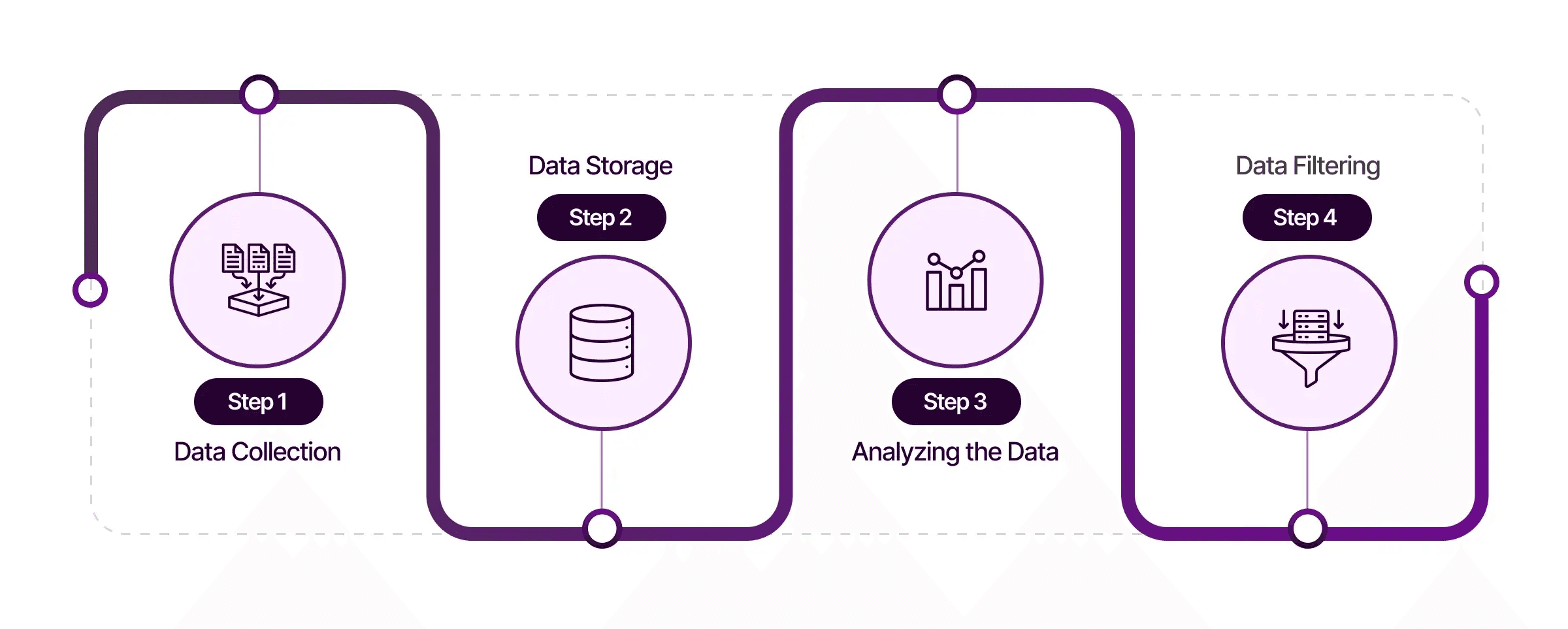
I like to think in four layers:
- Signals: events, content, and context with privacy constraints.
- Candidate Retrieval: narrow the universe quickly.
- Ranking: score candidates with features and models.
- Feedback: measure impact and update the system.
Each layer is independently deployable, observable, and testable. You can change the model without changing the schema; you can scale retrieval without touching ranking; you can run A/Bs without bricking production.
Layer 1: Signals and Feature Stores
Signals are your raw materials: impressions, clicks, purchases, dwell time, ratings, and explicit feedback. Add context (time, device, locale) and constraints (consent, regional residency, retention windows).
Design notes:
- Event taxonomy: capture impression and non‑click outcomes (dwell, saves) to avoid clickbait bias.
- Feature store: centralize features with lineage and SLAs; keep online/offline parity.
- Privacy: honor consent per user and region; support right‑to‑be‑forgotten workflows.
Layer 2: Candidate Retrieval (Fast and Forgiving)
Retrieval does most of the work by narrowing options to a few hundred. Use hybrid search: metadata filters (freshness, locale), collaborative signals (co‑view/co‑buy), and semantic retrieval (embeddings).
Patterns:
- Warm starts: popular, trending, editor picks when signals are sparse.
- Hybrid ANN: combine BM25 filters with vector search; re‑rank by recency/popularity.
- Diversity: constrain by category/creator to avoid repetitive slates.
Layer 3: Ranking (Make the Top Ten Earn It)
Ranking transforms candidates into ordered lists. Start simple: gradient‑boosted trees with hand‑crafted features. Later, add deep models that encode sequence, context, and content.
Signals to features:
- User: recency, frequency, monetary value, topic affinities, session length.
- Item: quality proxies, freshness, long‑tail boosts, safety tags.
- Context: time of day, device, network; implicit constraints (e.g., bandwidth).
Layer 4: Feedback, Evaluation, and Guardrails
You don’t optimize CTR; you optimize long‑term value with fairness and safety. Track multiple objectives: quality, diversity, satisfaction, revenue, and harm avoidance. Encode them as metrics and policy checks.
Related guidance on evaluations and gates appears throughout AI + SDLC and the ethics framing in The Ethics of Shipping AI‑Generated Code.
Serving Path (TypeScript Skeleton)
The API sketches below illustrate a clean separation: retrieve → featurize → rank → post‑process.
// services/recs/serve.ts
type UserContext = { userId?: string; locale: string; device: string; consent: { personalization: boolean } }
type Candidate = { id: string; score?: number; reason?: string; tags?: string[] }

export const retrieveCandidates = async (ctx: UserContext): Promise<Candidate[]> => {
  // 1) Metadata filter → 2) ANN vector search → 3) co‑view/co‑buy join
  // Return 500 candidates with rough scores and reasons
  return []
}

export const featurize = async (ctx: UserContext, cands: Candidate[]) => {
  // Join with feature store; compute session features; redact per consent
  return cands.map((c) => ({ ...c, features: { popularity: 0.42, freshnessDays: 3 } }))
}

export const rank = async (ctx: UserContext, rows: any[]): Promise<Candidate[]> => {
  // Call model/gateway; support A/B via headers/flags; return calibrated scores
  return rows.sort((a, b) => (b.score ?? 0) - (a.score ?? 0))
}

export const postProcess = (ctx: UserContext, ranked: Candidate[]): Candidate[] => {
  // Diversity constraints, safety filters, dedupe per creator, cap repeats
  return ranked
}

export const getRecommendations = async (ctx: UserContext) => {
  if (!ctx.consent.personalization) return []
  const pool = await retrieveCandidates(ctx)
  const rows = await featurize(ctx, pool)
  const ranked = await rank(ctx, rows)
  return postProcess(ctx, ranked).slice(0, 20)
}
Offline Training and Online/Offline Parity
Data leakage kills experiments. Keep the same transforms in training and serving. Use a feature registry with versioned definitions and unit tests for transforms. Store model versions and connect them to experiment IDs.
Cold Starts and Long Tails
Two hard problems:
- New users: ask for preferences; use contextual bandits; backfill with trending.
- Long‑tail items: boost exploration with decaying caps; maintain fairness by creator/genre.
Exploration vs Exploitation
Pure exploitation optimizes short‑term clicks; pure exploration wastes time. Use epsilon‑greedy or Thompson sampling at the slate or slot level; log propensities for unbiased offline analysis.
Safety and Policy
Safety is not a post‑hoc filter; it’s a first‑class constraint:
- Content safety: pre‑moderation and run‑time filters; red‑team tests for bypasses.
- Region and age policies: filter at retrieval and enforce at post‑processing.
- Provenance and licensing: store source metadata and block disallowed content.
Ethical and operational framing is covered in The Ethics of Shipping AI‑Generated Code.
A/B Testing and Experimentation
Run small, reversible experiments with clear hypotheses. Track both leading (clicks, dwell) and lagging (retention, revenue, satisfaction) indicators. Set guardrails to auto‑stop harmful experiments.
Snippet: Minimal Experiment Header and Logger
// services/exp/experiment.ts
export const chooseVariant = (userId: string, key: string, variants: string[]): string => {
  const h = Math.abs(hash(userId + key))
  return variants[h % variants.length]
}

export const logExposure = (userId: string, key: string, variant: string) => {
  console.log(JSON.stringify({ t: Date.now(), userId, key, variant }))
}
Observability and Post‑Incident Learning
Instrument every stage with traces and counters. When a slate underperforms or shows bias, export the cohort and replay offline with counterfactual evaluation. Feed the learnings back as features, constraints, or model updates.
Cloud vs On‑Prem, and Cost
Vector search and online features can be spendy. Use tiered storage (hot/warm/cold), qualify indexes per use case, and measure retrieval depth vs quality. Budget inference cost per recommendation and optimize for throughput under tail latency constraints.
Putting It Together (Rollout Plan)
- Define signals and event contracts; set privacy constraints and retention.
- Stand up a minimal retrieval service (metadata + simple ANN) with diversity constraints.
- Add a basic ranker (XGBoost) with a few strong features; measure.
- Introduce experimentation; pin model/feature versions; publish a scorecard.
- Grow features and models; add content embeddings; keep online/offline parity.
- Invest in observability and safety; document failure playbooks.
For orchestration patterns and safe automation, see Agentic Workflows.
Conclusion
Great recommendation systems are well‑lit factories: clean signals in, fast retrieval, principled ranking, and tight loops that reward long‑term value over short‑term clicks. Start with architecture, not hype. Keep components swappable, policies explicit, and experiments small and reversible. When the engine hums, models become the fun part - not the brittle part.