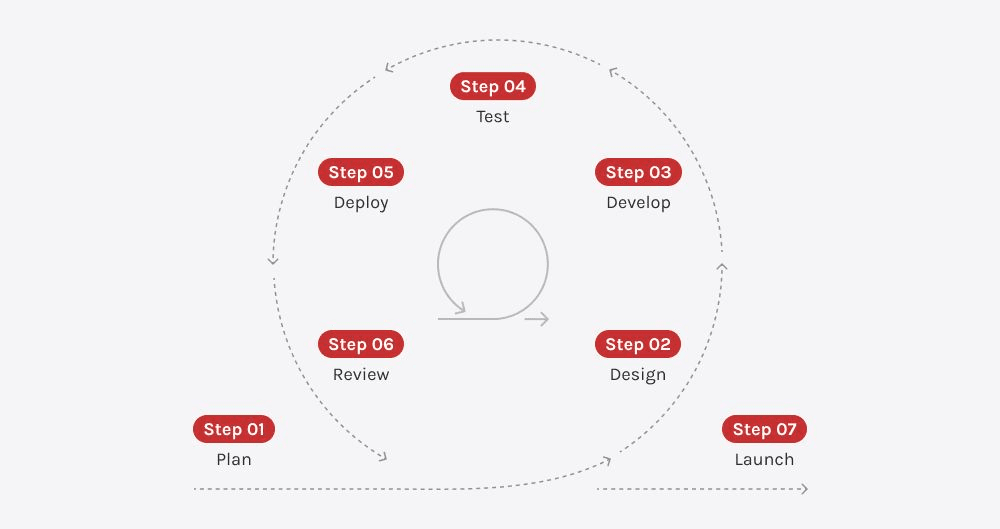
The SDLC is shifting from linear handoffs to feedback‑rich loops where humans and AI collaborate. Instead of a single “AI step,” modern teams instrument each phase - requirements, design, coding, testing, deployment, and operations - with assistive and autonomous capabilities. The result is shorter cycle times, higher quality, and a stronger focus on product outcomes over busywork.
TL;DR
- Real gains: faster discovery, clearer specs, safer code changes, broader test coverage, fewer regressions, tighter ops feedback.
- New roles: AI platform owner, prompt/evaluation engineer, data product manager, policy/compliance partner.
- Future skills: system thinking with AI, data fluency, evaluation literacy, secure automation, human‑in‑the‑loop design.
Where AI Upgrades Each SDLC Phase
1) Requirements & Discovery
- Turn qualitative inputs (calls, tickets, forums) into structured insights and prioritized themes.
- Generate user stories, acceptance criteria, and risk notes from product briefs; auto‑link to prior incidents and docs.
- Pitfalls: hallucinated requirements, missing constraints.
- Safeguards: ground to internal docs, require source citations, review deltas with stakeholders.
2) Architecture & Design
- Draft architecture diagrams, sequence flows, and ADR templates; compare design options against non‑functional requirements (latency, cost, privacy).
- Suggest reusable patterns, service boundaries, and event contracts from existing repos.
- Safeguards: keep human review on threat models, data residency, and compliance mappings.
3) Coding & Code Review
- Autocomplete, refactoring recipes, and safe boilerplate generation increase throughput and consistency.
- Repo‑aware assistants navigate large codebases, suggest APIs, and expose relevant examples.
- AI‑assisted reviews highlight risky diffs, missing tests, and dependency‑related vulnerabilities.
- Safeguards: typed interfaces, explicit schemas, unit property tests, mandatory reviewer sign‑off for high‑impact changes.
4) Testing & Quality Engineering
- Generate unit/integration tests from specs and usage traces; expand coverage for edge cases.
- Differential testing: synthesize inputs targeting changed code paths; detect behavioral drift.
- Non‑functional: chaos scenarios, cost/latency budgets, and security regression prompts.
- Safeguards: golden datasets, traceable evaluation reports, flaky test quarantines.
5) Release Engineering & Deployment
- Automated change logs, rollout plans, and feature flag strategies.
- Canary analysis with AI‑assisted anomaly detection on metrics, logs, and traces.
- Rollback playbooks that incorporate model/version pinning and configuration diffs.
6) Operations & Incident Response
- Rapid incident summarization across logs, traces, and dashboards with suggested next actions.
- Contextual runbooks that embed tickets, past incidents, and architecture notes.
- Post‑incident analysis: cluster root causes, propose prevention tasks, and update policy docs.
Tangible Team Benefits
- Cycle time compression: idea → PR → prod in hours, not days, for well‑scoped tasks.
- Quality uplift: broader automated checks and test generation catch issues earlier.
- Knowledge routing: assistants surface the right owners, docs, and examples in‑flow.
- Sustained velocity: less time on rote scaffolding and glue code; more on product logic.
- Risk transparency: AI highlights data, privacy, and compliance hotspots before they ship.
Emerging Roles and Responsibilities
- AI Platform Owner: operates model gateways, retrieval stores, cost/quality/latency SLOs, and access policies.
- Prompt & Evaluation Engineer: designs prompts/tools, curates golden datasets, runs regressions, tracks drift.
- Data Product Manager: treats datasets and embeddings as products with quality, lineage, and contracts.
- Domain Safety Lead: partners with legal/compliance to codify guardrails and audits.
- Developer Enablement: embeds repo‑aware assistance, patterns, and templates into the inner dev platform.
These are often part‑time hats in smaller teams; the key is clear ownership for prompts, datasets, and evaluations over time.
Operating Model: Human‑in‑the‑Loop by Default
Adopt a tiered autonomy model:
- Assist: propose drafts, diffs, tests, or runbooks; humans approve.
- Semi‑auto: auto‑apply low‑risk changes with monitoring and instant rollback.
- Auto: fully autonomous only for bounded, reversible tasks with strong guardrails.
Pair this with explicit SLOs (quality, latency, cost) and a review queue for high‑impact actions.
What to Measure
- Quality: test pass rate, escaped defect rate, groundedness score in reviews.
- Speed: PR lead time, change failure rate, MTTR.
- Cost: per‑change inference spend, evaluation minutes, review overhead.
- Adoption: assistant usage, suggestion accept rates, time saved per role.
Future Skills Developers Will Need
- Evaluation literacy: creating golden datasets, acceptance criteria, and drift monitors.
- Data fluency: understanding schemas, embeddings, retrieval, and privacy constraints.
- Tool orchestration: function‑calling, API design, idempotency, and safe side‑effects.
- Prompt design at system level: modular prompts, versioning, and context hygiene.
- UX for collaboration: designing workflows where AI augments, not obscures, human decisions.
- Security & compliance: redaction, secret management, policy enforcement, and auditability.
Implementation Checklist (Pragmatic)
- Define problem, risk tiers, and unacceptable failures; choose Assist vs Semi‑auto vs Auto.
- Inventory data sources; add redaction, residency, and access controls.
- Create prompts/tools with schema‑constrained outputs and idempotent actions.
- Build evaluations with golden datasets and regression gates on PRs and releases.
- Add observability: cost, latency, quality, and drift with alerts and dashboards.
- Start with a low‑risk slice; A/B test; document rollback and ownership.
Final Thought
AI is not a replacement for engineering rigor - it amplifies it. Teams that combine strong engineering practices with measurable AI assistance will ship safer, faster, and with more confidence. The SDLC becomes less about handing off documents and more about continuously learning systems.